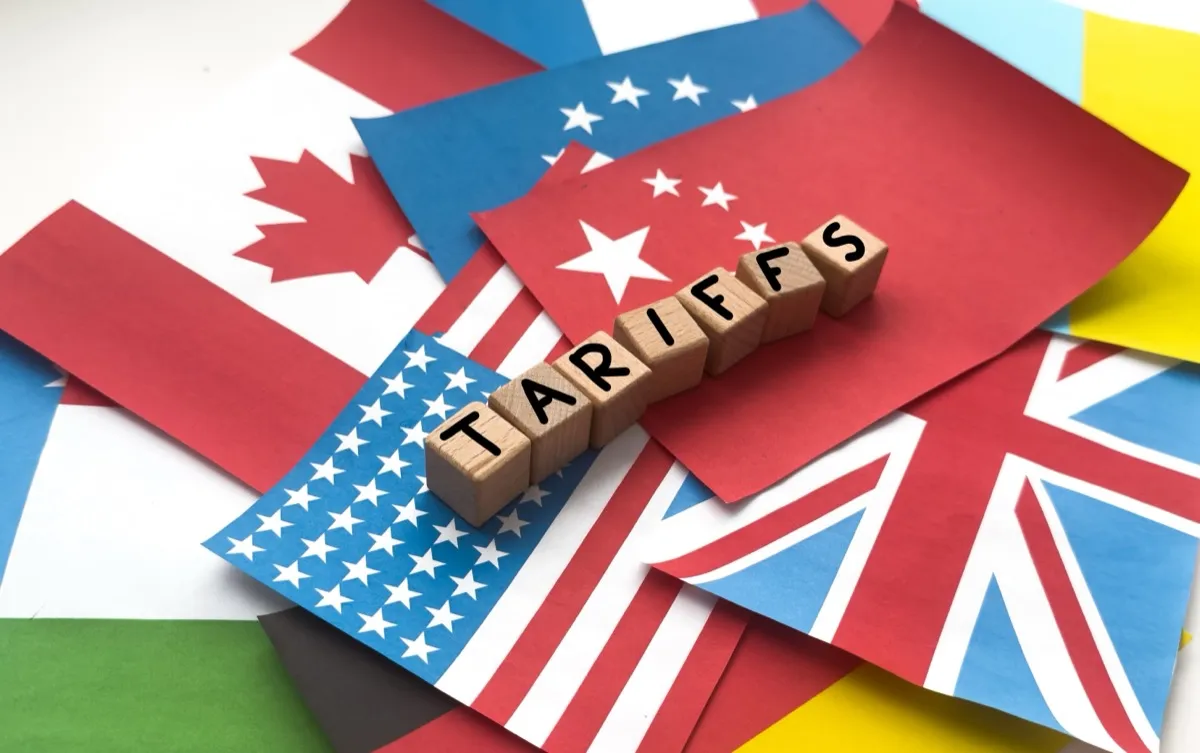
Illustration: GlobalWireNews Editorial
The United States and the United Kingdom trade more than £280 billion in goods and services every year. When Washington raises tariffs on British exports, the effects are rarely visible on any single household's bank statement — but they accumulate across industries, employment markets, and consumer prices in ways that are measurable and, for specific sectors of the British economy, significant.
The Background: Britain's Exposed Position
Since leaving the European Union in 2021, the UK has been trading with the United States under World Trade Organisation baseline terms — without the bilateral Free Trade Agreement that was promised as a flagship Brexit dividend. This means British exporters have no preferential access to the American market, and are directly exposed to any tariff measures Washington chooses to apply.
The current tariff environment includes a 25% rate on British steel and aluminium exports — measures introduced under Section 232 of the US Trade Expansion Act and maintained through successive administrations. More recently, broader baseline tariff measures have extended to a wider range of goods, increasing the cost of doing business across the Atlantic for manufacturers, food producers, and luxury goods exporters.
Which Industries Are Most Affected
The industries with the most direct exposure are those that sell significant volumes of goods into the American market. British steel producers — concentrated in Wales, Yorkshire, and the North East — face a 25% surcharge that makes their product less price-competitive against American and tariff-exempt alternatives. The motor industry exports components and vehicles that face additional cost pressures in the world's largest car market. Scotch whisky, which relies on the affluent American consumer as its primary premium market, has experienced the impact acutely during previous tariff episodes.
The pharmaceutical sector — in which Britain is the fourth-largest exporter in the world — watches Washington's trade policy closely. Any extension of tariff measures to pharmaceuticals would affect the business decisions of companies that employ tens of thousands of people across Scotland, the North of England, and the South East.
The Energy Connection
US geopolitical decisions also affect British energy bills. Since 2022, Britain has become a major importer of US liquefied natural gas as part of the post-Ukraine energy diversification strategy. American LNG is priced at a premium to pipeline gas, and US foreign policy decisions — including sanctions on competing producers — influence global gas market dynamics that feed directly into British household energy costs.
The Stalled Trade Deal: Why It Matters
The promise of a US-UK Free Trade Agreement has circulated since the 2016 referendum. It has not materialised. The obstacles are structural: American agricultural lobbies insist on access to British markets under US food standards that UK regulators have declined to accept; NHS pharmaceutical pricing creates friction with US drug companies; and the UK's Digital Services Tax on large American technology firms has been a persistent source of tension.
The asymmetry of the negotiating position is also relevant. The US economy is roughly seven times larger than the UK's. Washington has limited urgency to conclude a deal — British exporters need American market access more than American exporters need British. This power imbalance shapes every round of negotiations and explains why successive British governments have failed to convert promising rhetoric into a signed agreement.
How It Reaches Ordinary Households
For most British households, the effects are indirect but real. When exporting industries face reduced competitiveness, the downstream consequences — slower investment, constrained hiring, wage pressure — ripple across communities that depend on those industries. Regions like South Wales, Sheffield, and Speyside in Scotland have a long-standing economic dependence on sectors directly exposed to US trade policy.
There is also an exchange rate dimension. Periods of elevated trade tension between major economies generate currency volatility. A weaker pound — which tends to follow British economic uncertainty — raises the cost of dollar-denominated imports including energy, food commodities, and technology products, feeding into consumer price levels.
Editorial Notice
This article is for informational and educational purposes only. It does not constitute financial or investment advice. Data reflects publicly available institutional sources as of the publication date. Trade policy is subject to rapid change; readers should consult up-to-date official sources for current figures.